
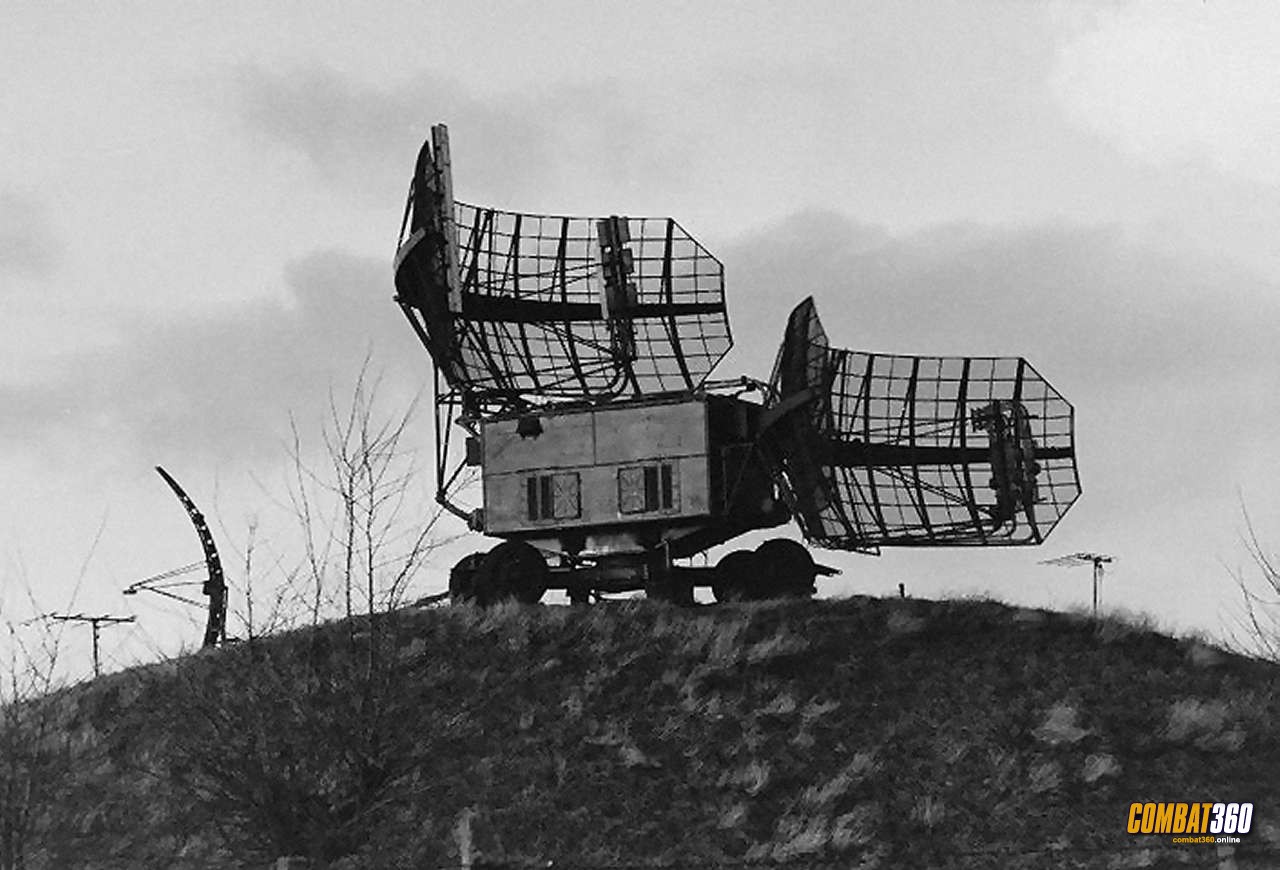
The P-35M (NATO reporting name “Bar Lock”) was a highly capable Soviet 2D mobile early-warning and ground control intercept (GCI) radar deployed to Angola in the 1980s. Its presence fundamentally altered the airspace dynamics of the Angolan Civil War, challenging the long-held air superiority of the South African Air Force (SAAF). P-35M (Bar Lock-B) was an upgraded version introduced with an improved antenna layout and enhanced tactical utility, famously deployed as the primary target search and acquisition radar for S-200 (SA-5 Gammon) missile battalions with a range of up to 320-350 km.
During the Border War / Angolan Civil War, the Soviet Union supplied a vast, integrated air defence network to support the People’s Armed Forces for the Liberation of Angola (FAPLA) and Cuban forces.
- The Radar Line: The P-35M units were integrated into a strategic “zigzag” early warning radar line stretched across southern Angola along the crucial Namibe-Menongue railway line.
- Key Locations: Major Bar Lock installations and associated air defence hubs were positioned at Namibe, Lubango, Menongue, Cahama, and Cuito Cuanavale.
- Integrated Network: The P-35M did not operate in isolation. It was networked alongside P-18 (“Spoon Rest”) and P-15 (“Flat Face”) target acquisition radars. When paired with “Side Net” height-finding radars, the P-35M acted as the primary GCI coordinator to vector Soviet-supplied MiG-23 fighters and guide SA-3 (“Goa”) surface-to-air missile systems against South African aircraft.
During the Border War / Angolan Civil War, the Soviet Union supplied a vast, integrated air defence network to support the People’s Armed Forces for the Liberation of Angola (FAPLA) and Cuban forces.
- The Radar Line: The P-35M units were integrated into a strategic “zigzag” early warning radar line stretched across southern Angola along the crucial Namibe-Menongue railway line.
- Key Locations: Major Bar Lock installations and associated air defence hubs were positioned at Namibe, Lubango, Menongue, Cahama, and Cuito Cuanavale.
- Integrated Network: The P-35M did not operate in isolation. It was networked alongside P-18 (“Spoon Rest”) and P-15 (“Flat Face”) target acquisition radars. When paired with “Side Net” height-finding radars, the P-35M acted as the primary GCI coordinator to vector Soviet-supplied MiG-23 fighters and guide SA-3 (“Goa”) surface-to-air missile systems against South African aircraft.