
As was customary for all operations, Captain Tomás held a meeting with the Lieutenants to plan the details of this operation.The order came from Sector A Command in Vila Cabral, via B.Caç.2853 in Macaloge, on which we were operationally dependent. The operational instructions made it clear that our mission was the destruction of the Maniamba base (it was becoming increasingly clear that we would not abandon that location without achieving this objective).
To this end, three Combat Groups were summoned under the command of Captain Tomás.Our guides were one of the women and the boy, captured on August 1st. The transportation problem was, at that moment, reaching a dramatic point. For large-scale operations, as was the case, we did not have enough vehicles to transport all the personnel. The Company stationed in Maniamba (C.Art.2495) lent us a Berliet truck, but even so, it was insufficient for the movement of all the personnel appointed for this operation. At that meeting, the issue of transport was a worrying matter and a crippling factor in the already defined strategy. The possibility of not using vehicles and carrying out the operation on foot was even considered, which was deemed inadequate due to the distance to be covered, the effort required of the personnel, and the need for them to be in their best physical condition during the assault.
It was also considered that the enemy would be much more attentive to our incursions due to the captures they had suffered in recent operations, so, on foot, we could reveal our approach too early and become an easy target. With no alternative, it was definitively decided to transport the personnel in two phases. The first would transport the support and engagement personnel for the objective, the second would transport the assault group and the Captain. It was also suggested and accepted that the assault group (the 4th Combat Group of Lieutenant Neto) would return on foot and independently, dispensing with their collection by vehicles.
Many personnel were already in the vehicles when the decision was put into practice, resulting in the withdrawal of some personnel, especially those from the assault group, who would be transported on the second trip.At 7:00 AM the first column left. About an hour later we heard a loud and frightening bang and immediately thought: a mine!
Companhia de Caçadores 2418 (CCac 2418).
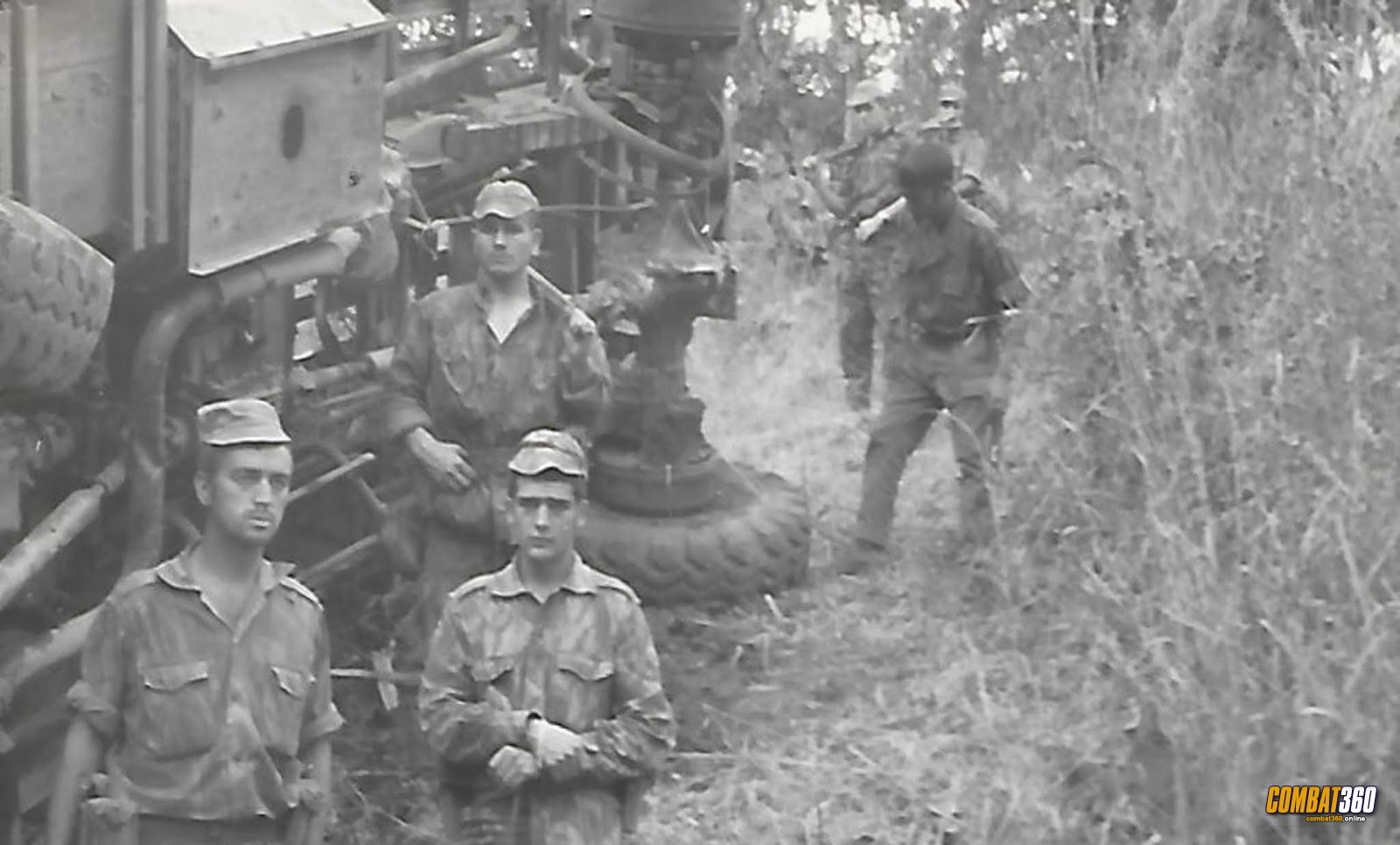
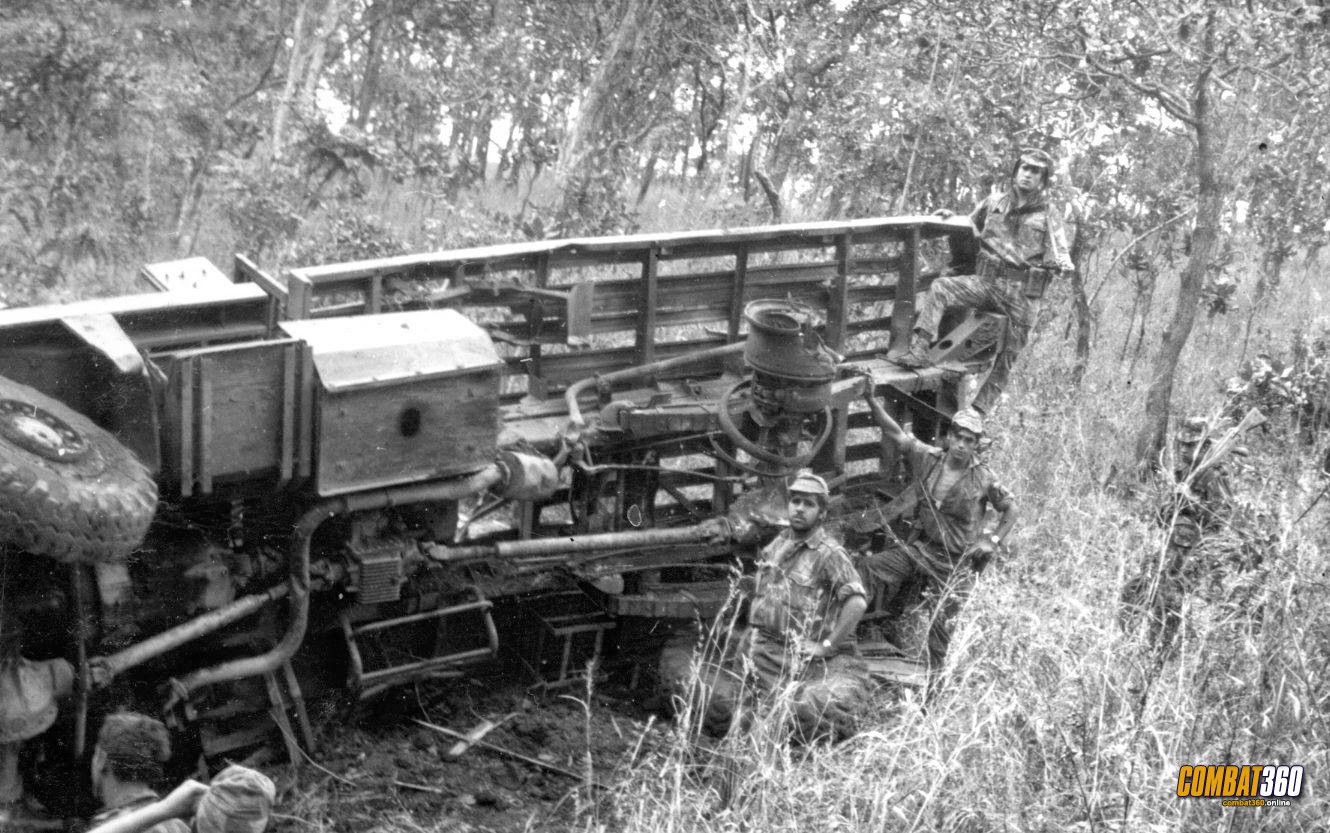
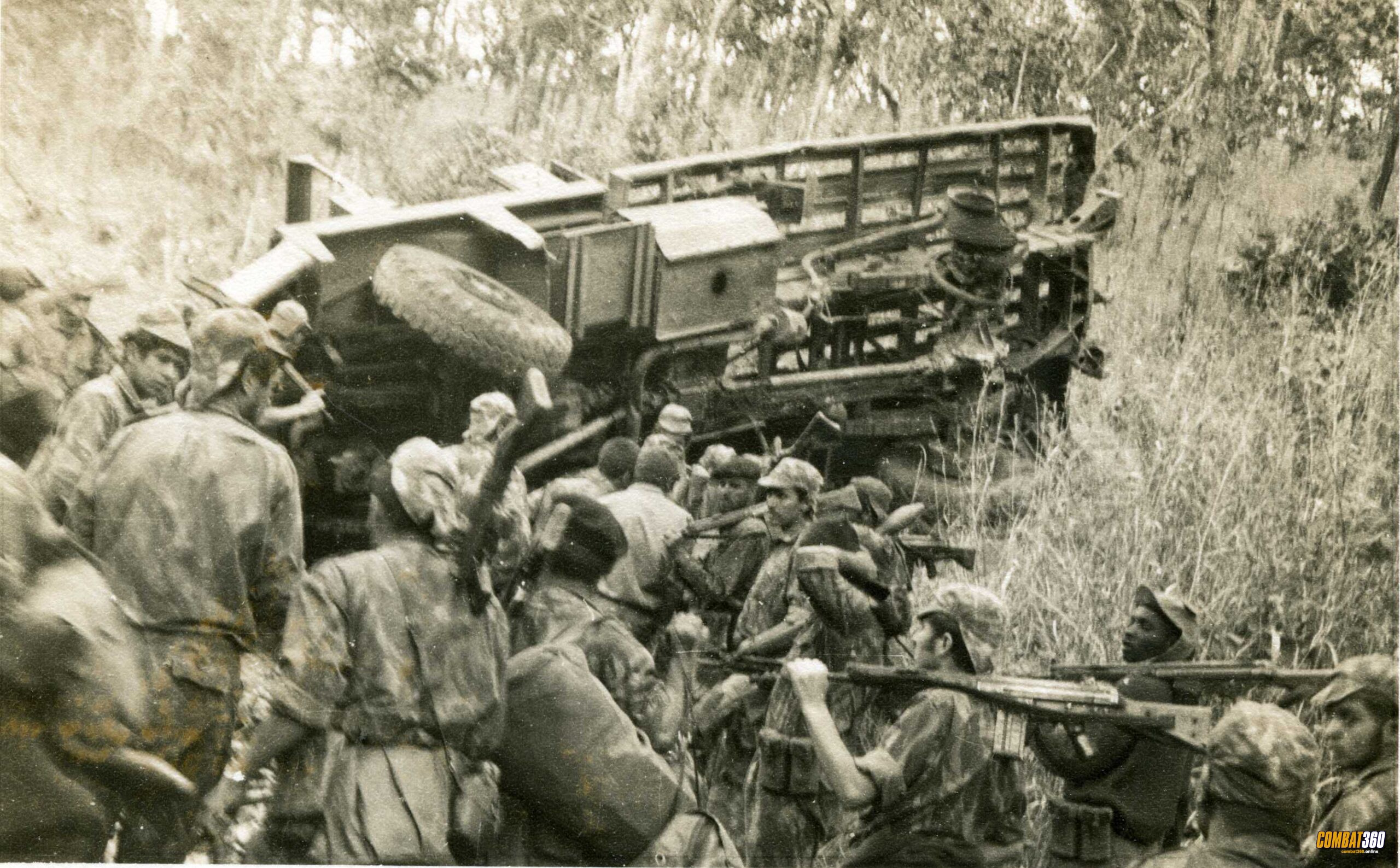
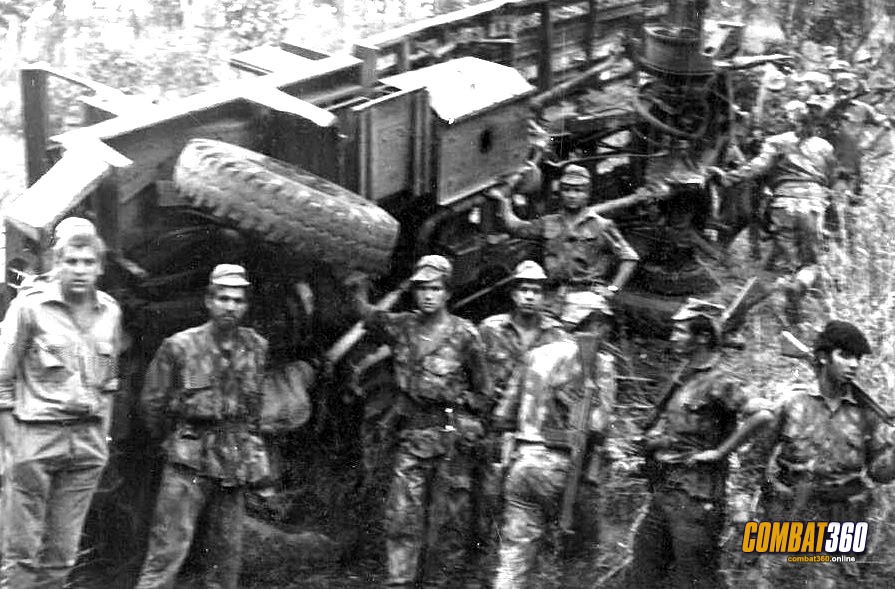
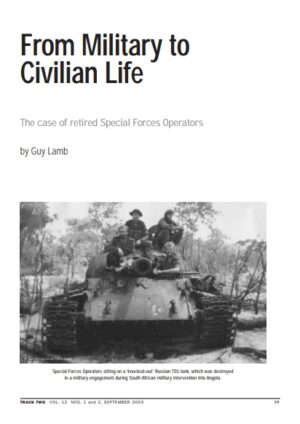
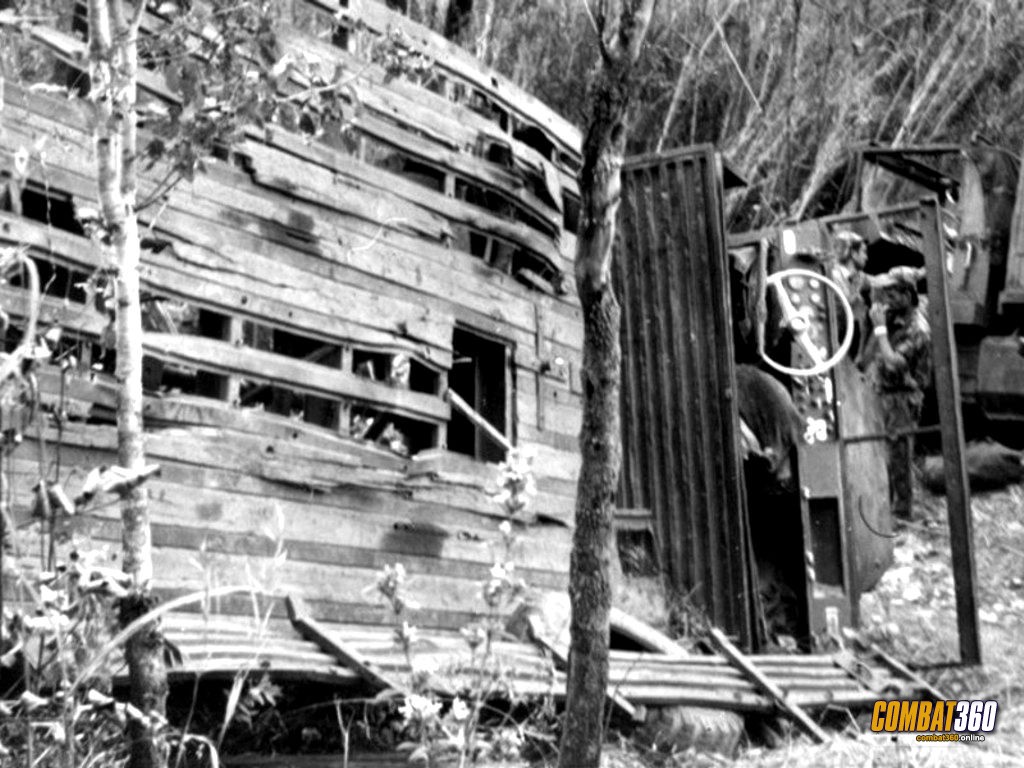
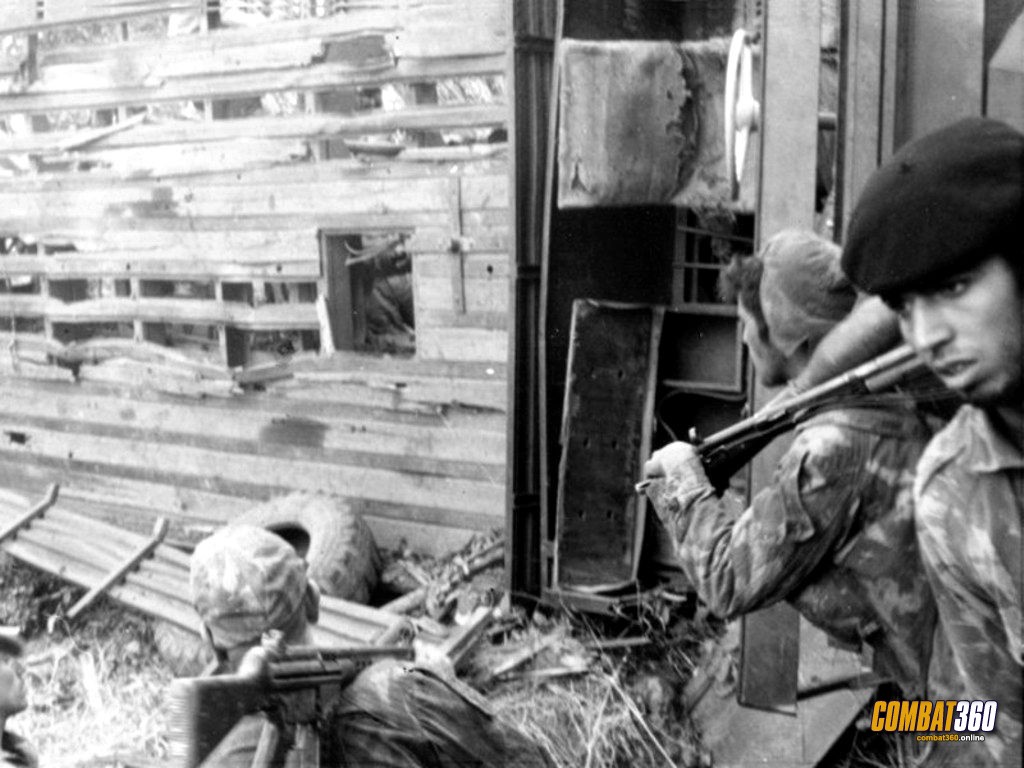
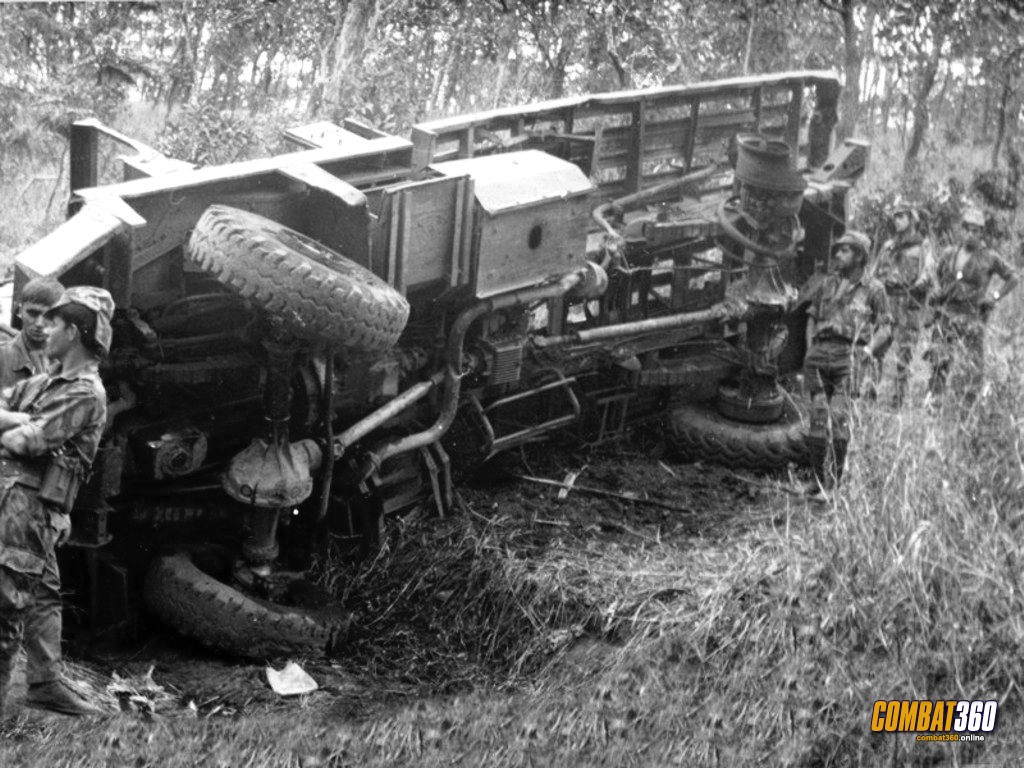
Indeed, it was a mine with fabulous power, exploding on the left rear wheel of the second vehicle (the borrowed one, carrying more personnel) commanded by Sergeant Balagueiras. This caused the mine to be lifted high and projected off the track, along with all the personnel inside. The comrades in the vehicle were thrown many meters into the air, falling helplessly or thrown a long distance, some against trees. Suddenly, we were confronted with dead and wounded, some very seriously.
The mine’s power can be assessed by the fact that we found pieces of the road surface and tire about 100 meters from the explosion site. The muddy area, where vehicles typically got stuck at that time, camouflaged the mine’s placement on a small bend that wasn’t touched by the vehicles’ first wheels. Its power will depend on the addition of recoilless rifle grenades, identical to those captured in Operation Koscina 2 or those found in the mine we dismantled in Operation Fogo Preso. The crater caused by this explosion was enormous, measuring around 3 meters in diameter and 1.5 meters deep.
Immediately, the personnel, still stunned but uninjured, improvised and used all available support and nursing resources to accommodate and arrange for the transport, using Unimogs, of the most seriously wounded to the camp. Simultaneously, the personnel awaiting the second trip (including the Captain) began efforts to meet our comrades. The canteen manager’s truck was requested, and a mechanic was appointed as the driver.
Companhia de Caçadores 2418 (CCac 2418).
A group advanced to help and treat the wounded personnel. Midway through the journey, the Captain crossed paths with a Unimog transporting wounded men and received the first information about the scale of the event. He decided to return in the Unimog (while the canteen manager’s vehicle continued to the site of the explosion) and heard the chilling expressions of pain and despair from the wounded in that vehicle, including Corporal Costa, who begged them to stop the vehicle and let him die there… the pain was unbearable.
Another man said he had been thrown from such a height that it seemed he would never reach the ground. It was urgent to arrange for the airlift of the very seriously wounded, as transporting them to Vila Cabral, 90 km away, was impractical. Air transport was not authorized to transport the dead, but we managed to evacuate them by air under the label of “very seriously wounded,” meaning they would die during the journey.
Meanwhile, at the barracks, a warehouse was transformed into an infirmary and morgue. The doctor from the Company stationed in Maniamba sprang into action and collaborated with our nurses in treating the wounded personnel who were arriving.
The group that continued in the canteen truck, upon arriving at the mine site, encountered an extremely shaken general psychological state, apathetic personnel with little capacity for intervention. It was necessary to stabilize the personnel and resolve outstanding issues on site, given that all the wounded had already been transported to the barracks. One of the comrades, deceased, remained at the scene.
Under the command of Lieutenant Neto, the 4th Combat Group carried out a sweep of the surrounding area for strategic control of the location. This group spent the night on a hill to the right, for surveillance and security of the vehicles. The following day, preparations were made to remove the damaged vehicle and tow it. Using improvised resources, the Auto Section, coordinated by Sergeant Filipe, managed to unlock the rear axle of the damaged vehicle and tow it to the barracks using the Berliet truck, which had become stuck at the front, a task only possible at the end of the afternoon of that day.
Companhia de Caçadores 2418 (CCac 2418).
The tragic result was 3 dead and 14 wounded, four of whom were natives. 3 dead: 1st Corporal António Leite Costa, 1st Corporal António Manuel Ferreira, Private Lino Ribeiro da Silva. 14 very seriously and seriously wounded (evacuated to Vila Cabral).
Joaquim António, José J. Ribeiro, Alberto Reis, Joaquim Veloso, António Cunha, Manuel Lima e Silva, David Oliveira, Jaime Barbosa, Manuel Teixeira, David Vilas-Boas, and four members of the local population, hired as porters. Of these, four of the most seriously injured were later evacuated to the mainland: Soldiers José J. Ribeiro, Joaquim António, Alberto dos Reis, and Manuel Lima e Silva.
Also wounded, but not requiring evacuation, were Sergeants Balagueiras and Pinela, and Corporal Mouta. There are many testimonies and recollections of that tragic moment.
It was a catastrophe and great suffering for those who survived and for all of us. Feelings of powerlessness, anger, despair, revenge, suffering, etc., flooded our minds. Tears did not alleviate the pain, and silence was chosen by many. Previous successes did not prepare us for this moment. The operation was cancelled. For the next fifteen days, there was a pause, in operational terms, for the Company’s physical and emotional recovery and to prepare for the next step: we couldn’t stop!
This event reinforced the intention of the Niassa Sector A Command, in Vila Cabral, which was discussed at the aforementioned Officers’ meeting: “In the initial instructions for the operation, it was clear that our mission was the destruction of the Maniamba Base, and it became increasingly evident that we could not abandon that location without achieving this objective.”
Companhia de Caçadores 2418 (CCac 2418).