
![Soldier of Fortune [1981'06]](https://africanwars.org/wp-content/uploads/2025/10/Clipboard_10-31-2025_02-1-300x412.jpg)
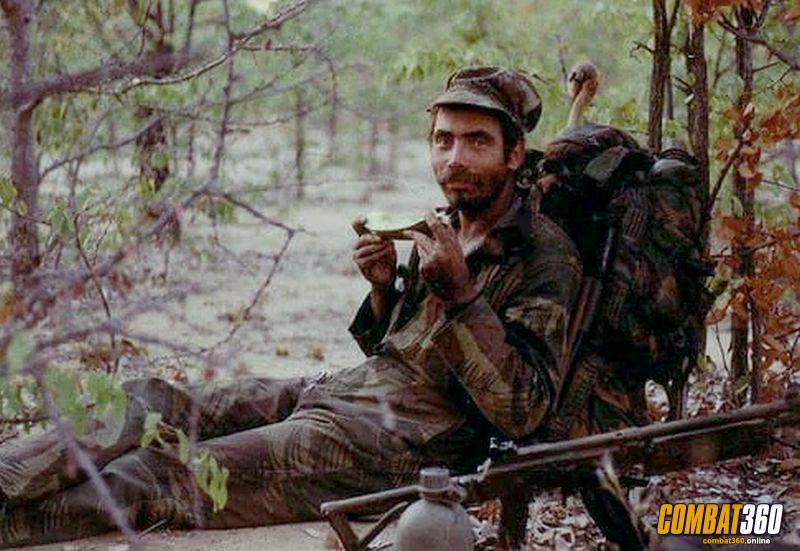
I was taking some time off of work at a shipyard in San Francisco and I had planned a trip to South Africa & Rhodesia for a couple of years. I was in contact with Al J. Venter from SOF magazine and Al told me what to bring over to Africa to trade with the farmers that would help me pay for my time in Africa. I was laid off of work for about 6 months to a year, so I figured this was the best time to get over to Africa. I got a 90 day visa to South Africa in San Francisco I had a return ticket good for 90 days.
I went over in April 1979 and was met in Johannesburg by Al J. Venter. I spent about a week with Al in SA and then he gave me some contacts in Rhodesia and dropped me off at the Rhodesia/SA border at Beitbridge, where I convoyed to Bulawayo for a couple of days. I then went to Salisbury and met some of Al's friends from the Rhodesian Light Infantry.
I was met by Corporal Rossouw and Corporal Barry, and they invited me to the RLI barracks for a party to celebrate the Support Commandos return from the bush. It was a great party and that is where I found that I missed my days in the military. The guys told me the war was going to be over soon when the government changed hands the next year, and to enjoy Rhodesia while I could.
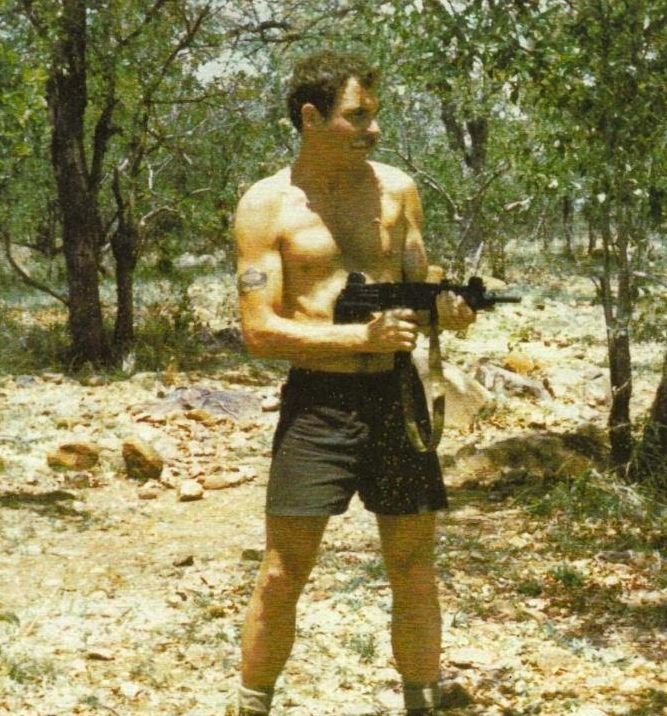 The next day I went down to the Army recruiting office and discovered that my application for the Rhodesian Army (that I had applied for 3 years earlier) had been approved, and they were awaiting my arrival into Rhodesia. The recruiter told me if I was approved to join the Army they would refund my plane ticket. My choice of unit was the Grey Scouts, SAS, or the Rhodesian Light Infantry. I took all my paperwork to the RLI barracks and was accepted into the Army. I was to go into Intake Class number #163 that was just starting their COIN phase of training, and had two weeks left till going to the Commando.
The Rhodesian Light Infantry was an Airborne Commando strike force for the Rhodesian Army. The RLI was involved in Fire-Force tasks, sometimes they operated as strike elements with the SAS and Selous Scouts. I ended up with Support Commando which was divided in to four Troops: Anti-tank, Mortar, Assault Pioneer and Recce.
Mortar Troop handled all the mortar & indirect fire tasks for all the Commandos during combat operations. The Anti-Tank Troop had 106mm recoilless rifles and took part in Fireforce duties. The Assault Pioneer Troop was an Engineer Troop within the Commando. The Recce Troop worked with the SAS, Selous Scouts and conducted Long Range Reconnaissance tasks for the Commando. The Recce Troop was very similar to the US Army's LRRP / Ranger Company in Vietnam.
The Fireforce concept usually involved the Selous Scouts, who would locate a group of terrs, then call out the Fireforce troops who would helicopter or parachute into combat and engage the terrs in the area and eliminate the them. Fireforce was one of the most effective combat tactics used in the Rhodesian War. When I reported to the Support Commando Commanding Officer, he looked at my US Army paperwork and told me Recce Troop was the place for me. My Recce Troop officer was an ex-US Army Vietnam Vet and Ranger Instructor by the name of 1st Lt John Coleman. My Troop Sergeant was Sgt. Trevor Hudson, then CSM Dennis Croukamp.
After my first Fireforce bush trip I was sent to the Rhodesian Para School for Airborne training. After this course, Recce Troop was training advanced marksmanship shooting skills. Three of our Sergeants had been to Sniper school and they began training us in two-man teams for upcoming combat operations.
I was a the #1 shooter with an ex-Royal Marine as my spotter and #2. CSM Croukamp was an instructor for some combat classes. Croukamp came from the School of Infantry after a legendary time in the Selous Scouts. He liked the caliber of the men of Recce Troop and wanted to come back to the RLI as our Command Sgt. Major. He wanted to get us involved in more operational tasks. Croukamp was a great teacher and would always make us aware of our surroundings. We were being schooled by one of the great Reccelegends in the Rhodesian Army. He was a superb leader in combat and if you were on External Ops you knew he would go all out to make sure you had support and everything you needed to have a successful combat mission.
One of the things I will always remember was that he told us to never rest our rifle against anything but our body, so that the weapon is a part of you and will not make any noise at any time. He was a master of camouflage and recce work, and wanted to make you as good as him. He was very humble and always looked out for his Recce troopers.
After the elections in 1980, there was supposed to be a coalition government between Bishop Muzorewa, Ian Smith, and Joshua Nkomo. The British Monitoring Forces that were sent to watch over the elections gathered the RLI, SAS, Selous Scouts and the RAR together and told us this is what is going to happen.
The majority of RLI guys had signed on a 1-year contract the previous April. The Selous Scouts immediately were disbanded. The South Africans took back all the arms and ammunition that they gave the Rhodesian Army and the foreign soldiers did not have any place to go after Rhodesia. South Africa then recruited us for 32 Battalion, 6 Recce (composed mostly of SAS C Squadron) and 4 Recce (Selous Scouts).
The South Africans saw the potential in our combat experience with the terrs in Mozambique, Zambia, and other border areas. We were recruited by the South African Military for a 1-year contract, with a rank upgrade and 1,500 Rand bonus upon completion of your contract, plus 500 Rand bonus when you got to South Africa. All we had to do was show up on the border ready to join. I was going to go to 32 BN, but when I got to Pretoria I was told about a new unit by CSM Croukamp. The unit was 44 Pathfinder Company (44 Parachute Brigade) commanded by Col Jan Breytenbach and a CSM Peter McAleese (ex Brit and Rhodesian SAS). I was ready to join along with a bunch of guys form the RLI.
When I arrived in South Africa in Sept 1980 I was expecting to go to 32BN on the Angola border. A number of RLI guys were already in 32Bn and waiting for the arrival of others from Rhodesia. Croukamp had told us about this Pathfinder Company that was being formed under the command of Col. Breytenbach (founder of the South African Recces). We would have to go through a selection course, another South African Para course and then on to operations…this was the unit for me….
We were taken to Murrayhill for an interview with the Colonel and CSM McAleese, and were told that we would undergo selection in six weeks time. We were then sent to the South African / Zimbabwe border camp at Mabalique for intense training under the direction of Jan Breytenbach and Peter McAleese.
A couple of guys who I served with in the RLI had already passed the selection course and gave me the heads up that it was to be very tough. I was 30 years old at that time and I was the oldest guy on my selection course. There were very few South African guys in the unit. One of our officers was a Capt. Botes, who had served in Angola with Breytenbach and 32 Bn. Botes was a very Afrikaner type of guy, and sometimes our strange humor did get the best of him.
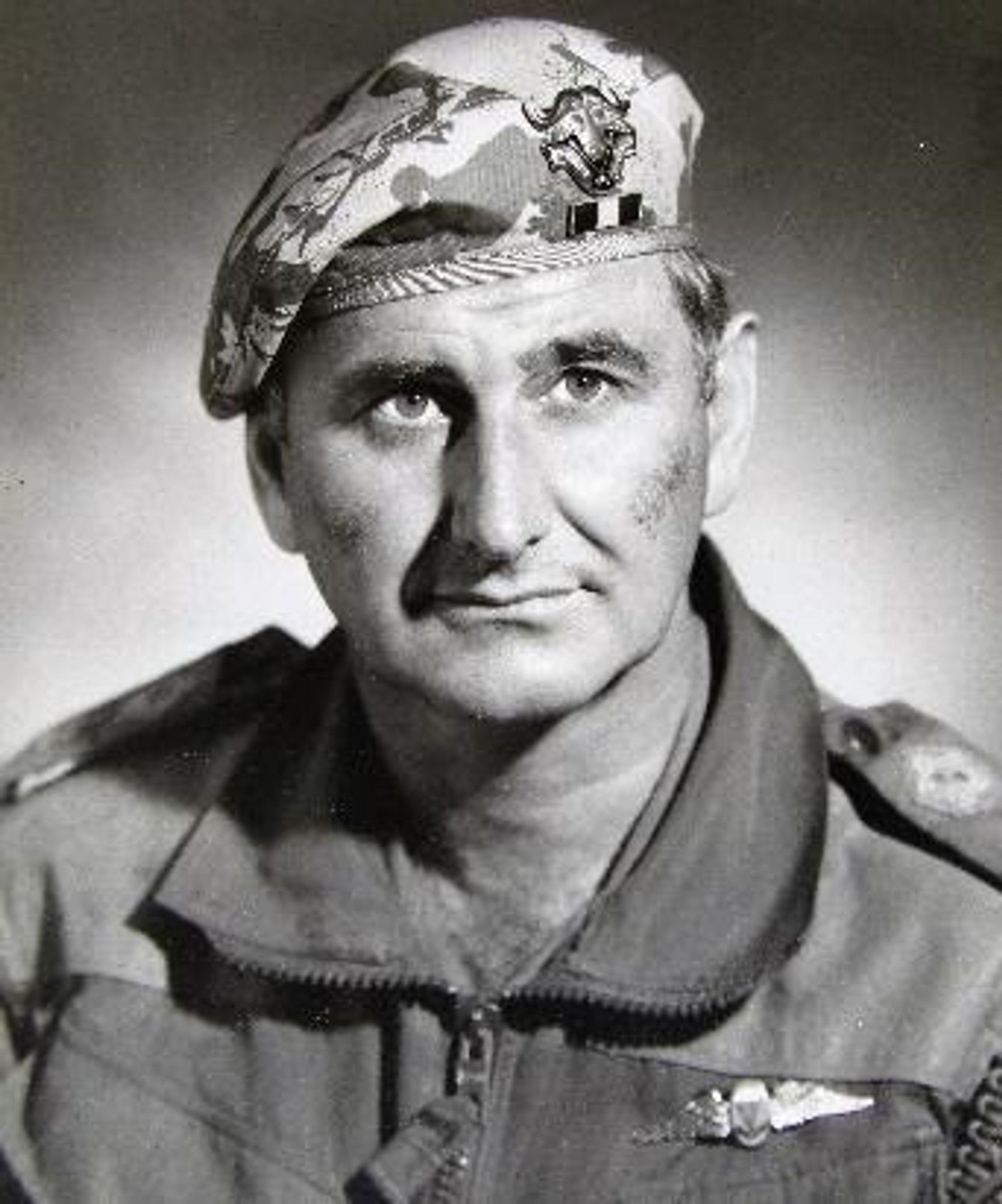
At night when we would cook up our dinner, Col. Breytenbach would talk about being at Ft. Benning, GA and working with the Americans. The Col once looked at my US Paratrooper tattoo and told me "I have those wings" (US). He was awarded US wings in 1960 during a year spent with the US Army. I told him I got mine in 1969.
During the next three months we would train close with the Colonel, and learn from the Soldier who was a legend and had raised and honed South Africa's Recce Regiments and 32 Battalion.
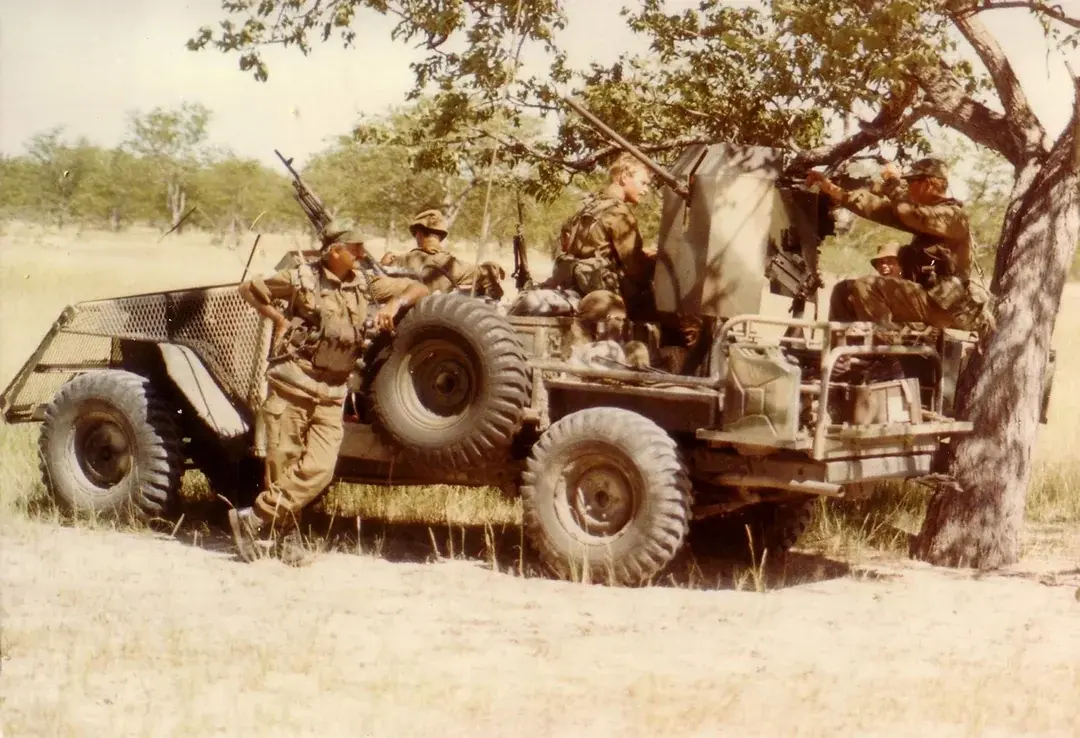
Colonel Jan Breytenbach leaning against a Sabre, with some of his Pathfinders.
One night after training, we asked CSM McAleese why he was so hard on us and the training. He told us about the screw up in Angola (McAleese had been involved in the Mercenary fiasco with untrained and criminal psychopaths in Angola, including 'Colonel Callan' who along with others were captured and executed), and that, if he was in charge, all the soldiers under him would be well trained. Later on, when I met Major Bob McKenzie of the Rhodesian SAS, he told me that if McAleese trained me, I was trained by the SAS. Later, during my tour in Angola, both Col. Breytenbach and CSM McAleese would lead us on our first combat operations. The selection was hard and after it we were ready. When I went to go get some fuel for one of our vehicles, the motor pool guys asked what unit I was with and who was my commander. When they found out I was with Colonel Breytenbach, I got anything I needed.
The Colonel was always trying to get us in on the Special Operations tasks. One of the first things we did as a unit was help a group of RENAMO soldiers infiltrate into Mozambique. The next operation was to get the Pathfinders into the action on the SWA/Angola border. These first combat operations were led by CSM Croukamp in December, 1980.
Our primary duties were to assist 32Bn when we could and provide a Pathfinder Capability to the SA Airborne Forces. After the arrival of our Sabre Attack Land Rovers and operations inside of Angola, the higher up in the SA Army thought that we were very strange because all we wanted to do was drink and fight. So that is when they nicknamed us the 'Philistines,' which was also the nickname for the foreign guys from the Rhodesian SAS, so we embraced the nickname. One of the best things about the unit was being in combat with some of the best soldiers on the African continent. and to serve with them in combat.
I took away a lifetime of soldiering experience from my time in Africa, and continued on some other adventures in civilian life. But the friends and contacts I made in Africa are my mates for life. I hope to put this all in a book in photos of Rhodesia, Angola, and some of the other places I soldiered in in Africa. I got to make combat Para blasts and kill some bad guys….it was a good time to be a soldier.